Logistics Efficiency Guide: Finding a Professional Pallet Lifter Manufacturer from China for Heavy-Duty Logistics
(ProNewsReport Editorial):- Shanghai, China May 28, 2026 (Issuewire.com) – This Logistics Efficiency Guide serves as a blueprint for global enterprises looking to optimize their heavy-duty operations by identifying a Professional Pallet Lifter Manufacturer from China that can deliver engineered material handling solutions.
Selecting the right industrial manufacturing partner in China is no longer just about looking for the lowest price; it requires a deep evaluation of technological innovation, customized engineering capabilities, and international compliance. For manufacturing, packaging, and logistics hubs that process high-frequency or heavy-weight loads daily, acquiring high-quality lifting technology directly impacts profitability and workplace safety. This guide outlines the essential execution steps to evaluate, match, and select a premium heavy-duty lifting partner capable of transforming logistics operations.
STEP 1: Analyzing Heavy-Duty Logistics and Industrial Demands
The initial phase of optimizing material handling involves a comprehensive audit of the facility’s physical constraints and operational demands. Heavy-duty logistics involves handling repetitive, bulky, or irregular loads–such as sugar bags, woven sacks, heavy cartons, wooden slabs, and metal drums–across multiple warehousing cells.
Industrial environments demand lifting solutions that mitigate the physical strain on operators, thereby accelerating material flows and eliminating accidental downtime. Manual handling of heavy materials not only lowers morale but also introduces occupational health hazards, leading to high employee turnover and potential legal liabilities. Therefore, modern enterprises require industrial-grade lifting equipment built to CE-certified (EN 13155), compliant with ISO 9001 and relevant European safety standards to ensure failure-free integration into intensive 24/7 supply chains.
STEP 2: Matching Operational Specifications with Equipment Models
A professional manufacturing partner must provide a diverse matrix of equipment specifications to align with specific handling frequencies, floor plans, and load weights. Rather than adopting a one-size-fits-all approach, procurement managers should map their exact physical requirements against detailed performance parameters.
When evaluating a manufacturer’s product portfolio, key technical parameters must be thoroughly analyzed:
- Lifting Capacity: The equipment must safely handle the specified load range. Professional configurations usually span from compact 10kg lifters up to heavy-duty industrial models capable of manipulating several tons.
- Lifting Speed and Heights: Efficient operations require variable speeds (e.g., 0 to 1 meter per second) and adequate lift strokes (ranging from 1550mm up to 4000mm) to reach high stacking racks or pallet layers.
- Power Configurations: Facilities must choose between fixed AC power systems or versatile DC rechargeable mobile setups, depending on whether the equipment serves a static station or moves across multiple grid locations.
STEP 3: Evaluating Technological Innovation and Core Competencies
The differentiator among industrial equipment suppliers is their dedication to research, development, and engineering excellence. A top-tier Chinese manufacturer should operate a scaled, state-of-the-art production base backed by rigorous quality management systems like ISO9001. Innovation should manifest in the integration of vacuum science and ergonomic mechanical engineering to simplify complex tasks.
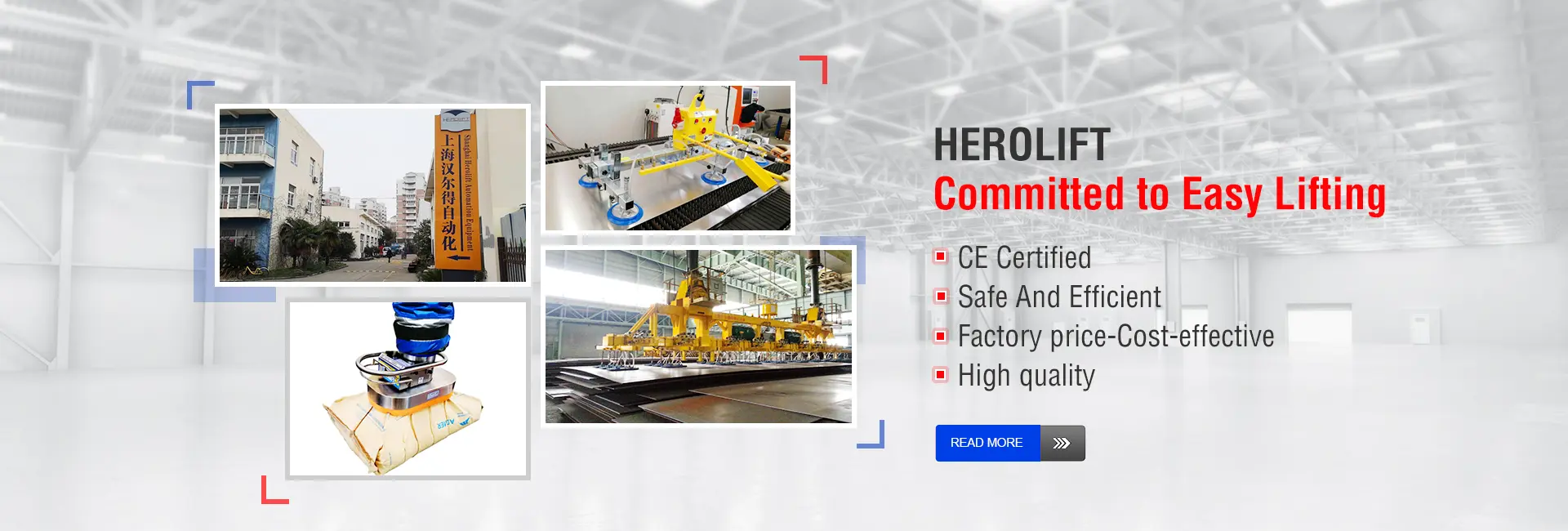
A premier example of this technological leadership is demonstrated by HEROLIFT, an industry pioneer established in 2006. Operating a state-of-the-art R&D and production base spanning over 7,000 square meters, the company focuses on delivering high-quality vacuum lifting devices, track systems, and loading/unloading equipment. By developing over 80,000 pieces of equipment and delivering more than 25,000 handling solutions across 60 global industries, the firm has proven how advanced vacuum engineering can simultaneously save effort, labor, time, and operational costs. Their technical expertise is further validated by a robust portfolio of certifications, including ISO9001 Quality Management, UDEM International Certification (EN ISO 12100), and specialized explosion-proof certifications, ensuring safety even in volatile industrial environments.
STEP 4: Case Analysis of High-Performance Mobile Suction Lifters
To understand how these advanced technical parameters operate in a real-world logistics environment, global buyers can analyze specialized mobile handling cases. A notable benchmark in material handling innovation is the VEL/VCL serial mobile suction tube lifter with a stacker, an integrated system designed for flexible, multi-station logistics operations.
This equipment utilizes a scissor-type folding arm that provides an extension of 0 to 2500mm, alongside a retractable pendulum that allows operators to move freely while conserving factory floor space when retracted. The system is engineered to handle various loads, including sacks, cardboard boxes, drums, and sheet metal, utilizing a quick-change connector that swaps suction feet without complex tooling.
Technical Parameter Matrix for the VEL & VCL Serial Models
The equipment is split into distinct engineering series to cater to different operational weight brackets:
VEL Heavy-Duty Mobile Series:
- Model Spectrum: From VEL100 to VEL300
- Lifting Capacity: Scaled from 30kg, 50kg, 70kg, up to a maximum of 300kg
- Tube Dimensions: Lift tube diameters range from 100mm to 300mm, paired with flexible tube lengths of 2500mm or 4000mm
- Lifting Velocity: Approximately 1 meter per second
- Lifting Heights: Dynamic lift strokes ranging from 1500mm up to 2500mm, depending on model volume
- Vacuum Pump Power: Configured with robust 3kW to 5.5kW pumps to maintain a strong vacuum hold
VCL Compact Mobile Series:
- Model Spectrum: From VCL50 to VCL140
- Lifting Capacity: Optimized for lighter, fast-paced loads of 12kg, 20kg, 35kg, 50kg, and 65kg
- Tube Diameter: ranges from 50mm to 140mm
- Stroke and Power: Fixed 1550mm stroke powered by efficient 0.9kW to 2.2kW motors operating at a rated speed of 1420 r/min
A critical innovative feature of this series is its 24VDC rechargeable mobile handling suction crane mechanism. In rigorous battery endurance testing, after a full charge, the suction crane continuously operates for 4 hours while retaining 35% of its reserve battery capacity. Furthermore, it incorporates an automatic self-locking mechanism on its folding arm, an integrated silent hood with wave sound-absorbing cotton to minimize warehouse noise pollution, and a lightweight jib crane system that reduces manual physical exertion by more than 60 percent. This precise combination of mechanical reliability and vacuum power illustrates the level of engineering excellence buyers should look for when selecting a professional supplier.
Conclusion: Driving Global Supply Chain Efficiency
Optimizing heavy-duty logistics is a continuous process of integrating ergonomic technology into daily material flows. Partnering with an established Chinese manufacturer allows global companies to access high-tier vacuum lifters that streamline material transfers, protect product surfaces from damage, and protect workers from workplace injuries. With a global footprint spanning over 150 countries, premium manufacturers provide a comprehensive suite of services including custom engineering design, strict production testing, professional installation training, and responsive after-sales support. By executing a methodical step-by-step evaluation focused on technical parameters, certified quality standards, and verified performance cases, supply chain leaders can successfully future-proof their logistics infrastructure and unlock new levels of operational efficiency.
To discover more about advanced vacuum handling solutions and explore customized industrial lifting equipment, please visit the official company website at HEROLIFT.
This article was originally published by IssueWire. Read the original article here.