
What Defines A High Quality Pall Ring Factory in the Modern Chemical Industry?
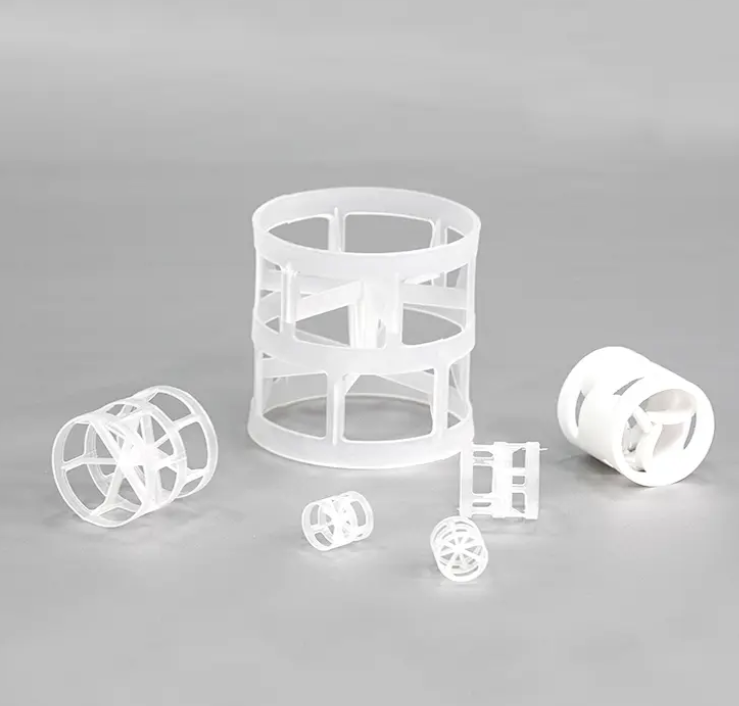
(ProNewsReport Editorial):- Pingxiang, Jiangxi Jun 3, 2026 (Issuewire.com) – In a busy petrochemical refinery located in an industrial coastal zone, engineers recently faced a recurring challenge: a massive absorption tower was experiencing erratic pressure drops, leading to inconsistent product purity. After a thorough internal inspection, the culprit was identified not as a mechanical failure of the pumps, but as the degradation of the tower packing. The rings had deformed under thermal stress, causing “channeling” where gas and liquid failed to interface effectively. This scenario highlights a fundamental reality in mass transfer applications–the operational efficiency of a multi-million dollar facility often rests on the geometric precision of small, cylindrical components. Selecting a High Quality Pall Ring Factory is no longer just a procurement task; it is a critical engineering decision that dictates the long-term reliability of chemical processing units.
Defining the Standards of a Modern Production Facility
The definition of a high-tier manufacturing plant in the contemporary market has shifted from simple volume output to the provision of predictable mass transfer performance. For an industry partner like JXKELLEY Chemical Packing Co., Ltd., maintaining this standard involves a deep integration into the industrial cluster of Pingxiang, Jiangxi, combined with a focus on smart manufacturing. A high quality pall ring factory must ensure that every batch of packing delivers consistent gas and liquid distribution. When packings are uniform, the liquid film spreads evenly over the surfaces, allowing for optimal contact with the rising gas.
By utilizing advanced production frameworks, JXKELLEY ensures that the geometric integrity of each ring–whether made of plastic, metal, or ceramic–remains intact even under heavy bed loads. This consistency helps plant operators achieve long-cycle stability and lower energy consumption, as the blowers and pumps do not have to compensate for irregular resistance within the tower.
Performance Foundations: Geometry and Mass Transfer Efficiency
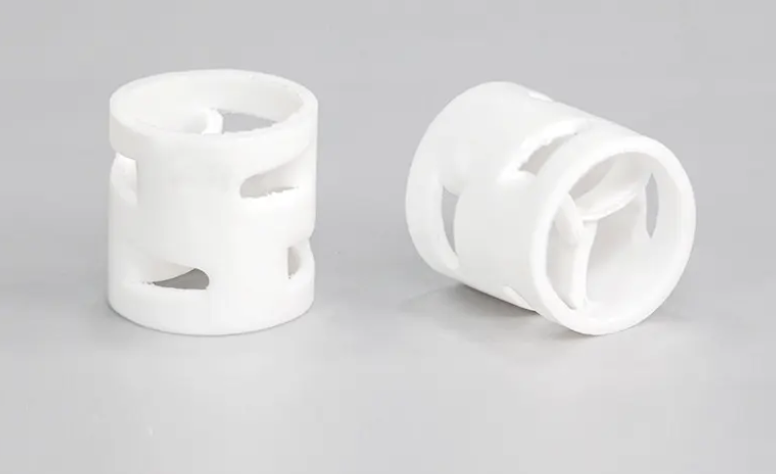
The functional value of a pall ring lies in its evolution from the basic Raschig ring. The classic design, featuring interior “windows” and inward-curved tongues, is engineered to open up the inner surface of the cylinder. In a high quality pall ring, these openings are precisely stamped to ensure that the internal and external surfaces are equally accessible to the liquid and gas phases.
This structural advantage significantly improves the distribution of fluids and eliminates the risk of “wall flow,” where liquid tends to migrate toward the tower shell rather than staying in the active packing zone. From an engineering perspective, the key metrics are high specific surface area and high void fraction. When JXKELLEY Chemical Packing Co., Ltd. manufactures these components, the focus is on maximizing these parameters to increase the mass transfer rate. By reducing the resistance to vapor flow, the pressure drop across the bed is minimized, directly translating to reduced operational costs for the end user.
Material Matrices for Extreme Operating Environments
Industrial applications are rarely uniform, and a versatile pall ring factory must offer a comprehensive matrix of materials to suit specific chemical environments. Different processes demand different levels of mechanical strength and chemical resistance.
- Metal Series:For the petrochemical and air separation industries, stainless steel grades such as 304 and 316L are the standard. JXKELLEY provides metal pall rings that maintain high mechanical stability even in deep-bed applications where the weight of the packing might otherwise cause deformation. These materials are essential for high-temperature zones where structural rigidity is paramount.
- Specialty Plastics:In the chlor-alkali and strong acid sectors, corrosion is the primary enemy. Materials like CPVC and PVDF are utilized for their exceptional resistance to aggressive chemical attack. For more standard applications, PP (polypropylene) and RPP (reinforced polypropylene) offer a balance of economic value and reliable performance in cooling towers and scrubbers.
- Ceramic Series:In environments involving extreme heat or highly acidic conditions (excluding hydrofluoric acid), ceramic packings remain the most durable choice. These are frequently deployed in drying towers and sulfur dioxide absorption units where organic materials would fail.
Manufacturing Standards in the Era of Intelligence
The shift toward intelligent manufacturing has redefined quality control in the packing industry. In 2020, JXKELLEY invested in a technology-based 5G intelligent manufacturing plant to modernize its production capabilities. This automation is critical because it removes the variability inherent in manual or legacy mechanical processes.
In a 5G-enabled environment, sensors and automated lines ensure that parameters such as wall thickness, opening ratios, and roundness are strictly maintained across millions of units. Even a slight deviation in the curvature of a pall ring’s “tongue” can alter the pressure drop across a large-scale tower. By adhering to ISO9001:2018 quality management systems, JXKELLEY ensures full traceability from the raw material–always emphasizing the use of virgin resins and high-grade alloys–to the finished product. This prevents the performance degradation often associated with the use of recycled materials, which can lack the necessary thermal stability and tensile strength.
Engineering Value and Total Cost of Ownership
Ultimately, the goal of integrating high-quality components is to reduce the Total Cost of Ownership (TCO). While tower packing represents a small fraction of the initial capital expenditure of a chemical plant, its performance influences the largest share of operating expenses. A pall ring factory that delivers precision-engineered products helps clients achieve “high flux, low energy, and low maintenance” goals.
By providing products that comply with international standards such as ASTM and GB, JXKELLEY supports the engineering integrity of absorption towers, cooling towers, and distillation columns. Whether it is the ISO14001:2018 environmental certification or the ISO45001:2018 occupational health standards, the internal management of a facility reflects the reliability of the products it ships. In the modern chemical landscape, the definition of quality is found in the intersection of precise geometry, material durability, and the consistency of intelligent manufacturing.
For more information on high-performance chemical packing solutions, please visit: https://www.kelleychempacking.com/.
Media Contact
Jiangxi Kelley Chemical Packing Co., Ltd.
Floor 4, Block 9, ChunLei Building, Anyuan area, Pingxiang city, Jiangxi, China, 337000
This article was originally published by IssueWire. Read the original article here.



